

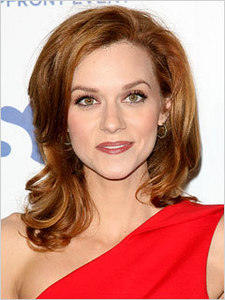
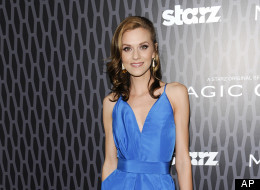
White Collar actress Hilarie Burton is set to guest star in an upcoming episode of ABC’s Castle, EW has learned. Burton, who also played Peyton on CW’s One Tree Hill for six seasons, will play Kay Cappuccio, a reality TV star with good looks, charisma, and a knockout bod. According to casting scoop, the tabloid darling has “achieved significant fame and fortune without possessing any discernible skill or talent” and “is famous mostly for being famous.” Sounds like someone we know… not that I’m naming names — because I already did in the headline.
The character, however, is more complex than some might think, as she both relishes the spotlight and “at the same time feels like a prisoner of her own celebrity lifestyle.”
Burton will appear in episode 13, “An Embarrassment of Bitches,” set to air in 2012.
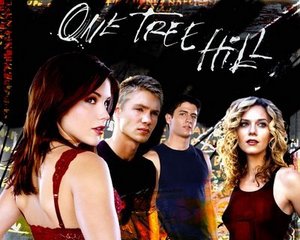

We all know that Chad Michael Murray is returning for an episode of One Tree Hill's ninth and final season. Hell, we spent weeks freaking out about it! But, a little birdie (ahem, me) heard that he may be back for more than one episode. Yes. For real.
While at Chad's NYC book signing tonight (for his graphic novel Everlast -- get it!) a fan yelled, "Come back to One Tree Hill, Chad!" Chad nicely smiled and replied, "I did! We've shot one episode so far."
That's when I stopped in my tracks. Wait. A. F*cking. Second. "So far?" I asked (loudly). Oops. No one else seemed to catch it! WHAT?!? Was this just a slip of the tongue or will Chad be back for more?!? "We'll see," he said with an innocent grin.
Come on. Maybe Chad was just teasing us, but either way, The CW execs better their their cards right! CMM is ratings gold!
Stay tuned for my interview with Chad as well as photos from the event! I totally fan-girled out on him and he was super nice about it. #Embarrassing #WorthIt
While at Chad's NYC book signing tonight (for his graphic novel Everlast -- get it!) a fan yelled, "Come back to One Tree Hill, Chad!" Chad nicely smiled and replied, "I did! We've shot one episode so far."
That's when I stopped in my tracks. Wait. A. F*cking. Second. "So far?" I asked (loudly). Oops. No one else seemed to catch it! WHAT?!? Was this just a slip of the tongue or will Chad be back for more?!? "We'll see," he said with an innocent grin.
Come on. Maybe Chad was just teasing us, but either way, The CW execs better their their cards right! CMM is ratings gold!
Stay tuned for my interview with Chad as well as photos from the event! I totally fan-girled out on him and he was super nice about it. #Embarrassing #WorthIt
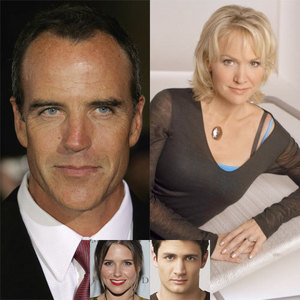
The rumblings about Chad Michael Murray leaving One Tree Hill are not surprising. But please tell me the CW is not foolish enough to let Hilarie Burton leave, too. — Mr Orange
MATT: What if I told you that perhaps neither actor is leaving? A setsider tells the Buzz that Tree Hill producers seem to be allowing for such an outcome, seeing as the season finale script makes no reference to Lucas and/or Peyton ... and/or their soon-to-arrive baby/babies ... leaving town.
link: link
So what do you think?? Leave a comment =]
MATT: What if I told you that perhaps neither actor is leaving? A setsider tells the Buzz that Tree Hill producers seem to be allowing for such an outcome, seeing as the season finale script makes no reference to Lucas and/or Peyton ... and/or their soon-to-arrive baby/babies ... leaving town.
link: link
So what do you think?? Leave a comment =]


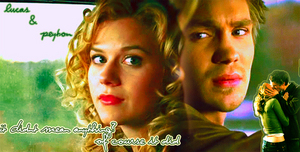
We just got carried away. It didn't mean anything. It didn't? Of course it did.
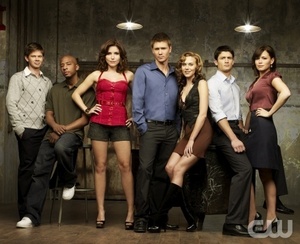
Robert Buckley, who famously played Kim Raver's Lipstick Jungle boy toy and subsequently did a turn on Privileged, will resurface this fall on the CW's One Tree Hill.
Buckley will play Clayton, the sports agent who takes on NBA-bound Nathan as a client and friend, says the Hollywood Reporter.
Brian Austin Green was until recently eyed for this series regular role, but ultimately a deal could not be worked out.
Buckley's Tree Hill gig stems from a holding deal he had with Privileged producer Warner Bros. TV.
One Tree Hill is adding three new characters for Season 7, as the show moves on without longtime leads Hilarie Burton and Chad Michael Murray. The two characters remaining to be cast are Haley's sister, Quinn, and a supermodel who goes to work for Brooke.
Buckley will play Clayton, the sports agent who takes on NBA-bound Nathan as a client and friend, says the Hollywood Reporter.
Brian Austin Green was until recently eyed for this series regular role, but ultimately a deal could not be worked out.
Buckley's Tree Hill gig stems from a holding deal he had with Privileged producer Warner Bros. TV.
One Tree Hill is adding three new characters for Season 7, as the show moves on without longtime leads Hilarie Burton and Chad Michael Murray. The two characters remaining to be cast are Haley's sister, Quinn, and a supermodel who goes to work for Brooke.
